

Kelly Johnson, Skunk Works And The Days When America Did The Biggest Things
Set those TPS reports on fire, friends


It’s with great pleasure that we present this excerpt from The Impossible Factory by Josh Dean. It’s a tremendous, new book about Kelly Johnson and Lockheed Skunk Works.
Copyright 2026 by Josh Dean. Published by Dutton, an imprint of Penguin Random House.
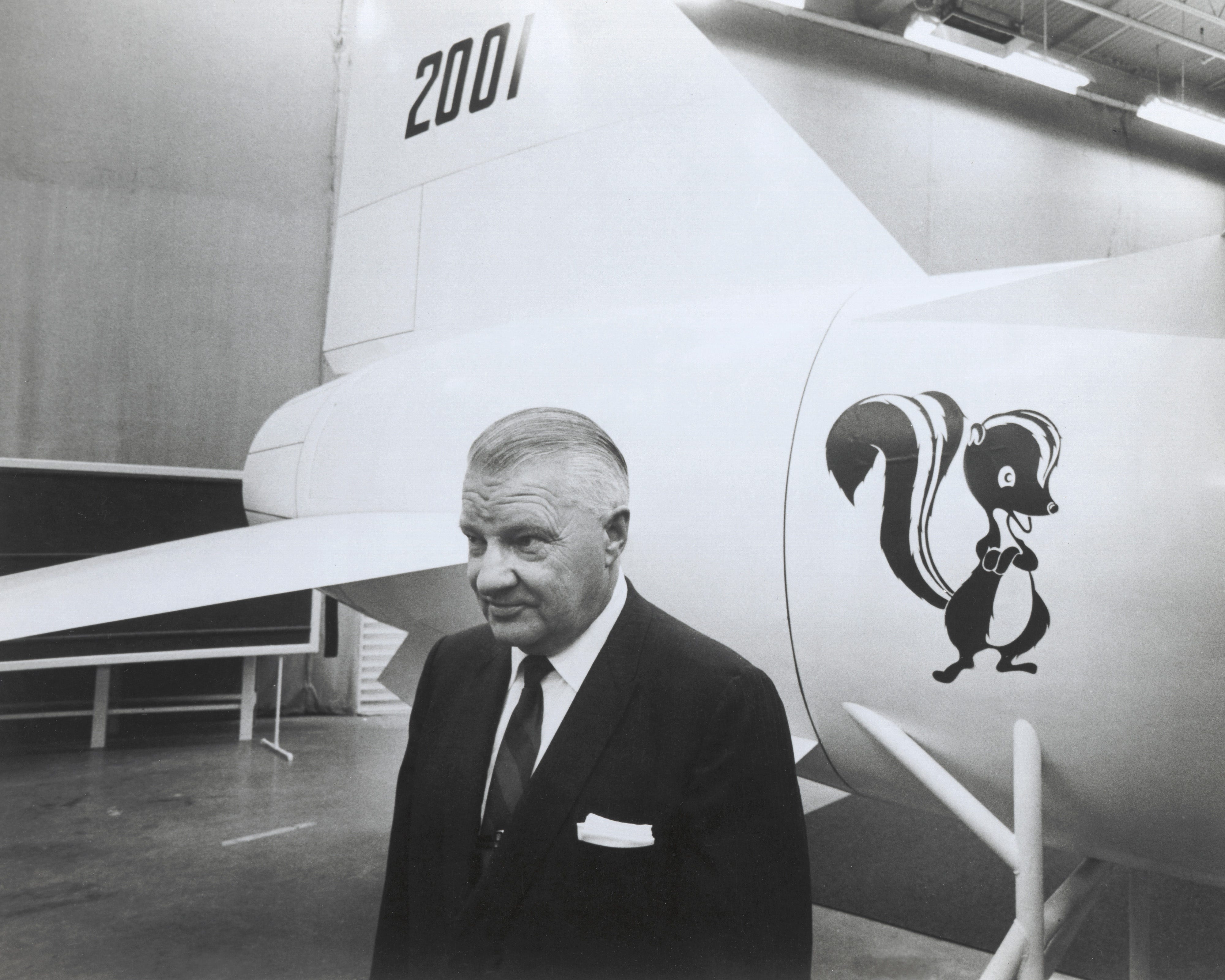
Kelly Johnson knew that engineers, especially those in defense contracting, had a responsibility to understand and predict the market. No commercial enterprise that lives at the bleeding edge of technology can survive for long if it doesn’t anticipate the needs of its buyers far in advance. So, Kelly was constantly talking to his contacts in the Defense Department and in the national intelligence establishment about the global chessboard and the challenges that lay ahead.
He caught wind of a “desperate need” for a new type of American aircraft before anyone asked him for it—one that “could safely fly over the USSR” and bring back critical information on Russia’s missile capability and other details about its defenses and military infrastructure.
On May Day 1954, the Soviets unveiled their latest nuclear bomber—the Myasishchev M‑4 “Hammer”—which soared low over Red Square, creating quite a stir in Washington, especially because it hadn’t even been a year since the USSR had detonated the world’s first hydrogen bomb.
Top officials—including, if not especially, President Dwight Eisenhower—were particularly worried about the Soviet Union’s strategic bombers, like the Hammer, which could carry nuclear weapons and which U.S. military and intelligence leaders knew almost nothing about: a type of plane that would potentially allow for a Pearl Harbor–style sneak attack, but far worse.
In the spring of 1954, Eisenhower asked James Killian, president of MIT, to form a committee to make recommendations for how the United States could leverage its tremendous base of scientific and technological firepower to determine what the Soviet military was capable of—and as a result, how much danger America was truly in.
A subcommittee was told to “find ways to increase the number of hard facts upon which our intelligence estimates are based, to provide better strategic warning, to minimize surprise in the kind of attack, and to reduce the danger of gross overestimation or gross underestimation of the threat.” No pressure there.
The United States and the Soviet Union were still in the early days of a nuclear arms race, and any edge in that race created leverage in the battle for global supremacy. But there was a fundamental imbalance when it came to intelligence gathering. As a free and open society, the United States was susceptible to on‑the‑ground spying. But the Soviet Union, being a closed, authoritarian state, was nearly impossible to infiltrate with spies.
To make up for that, the United States had to be creative. It would need to use science and technology to out‑spy the Russians. And if American spies couldn’t get into the Soviet Union to gather intel, they’d have to fly over it, which presented its own challenges. Like being shot down.
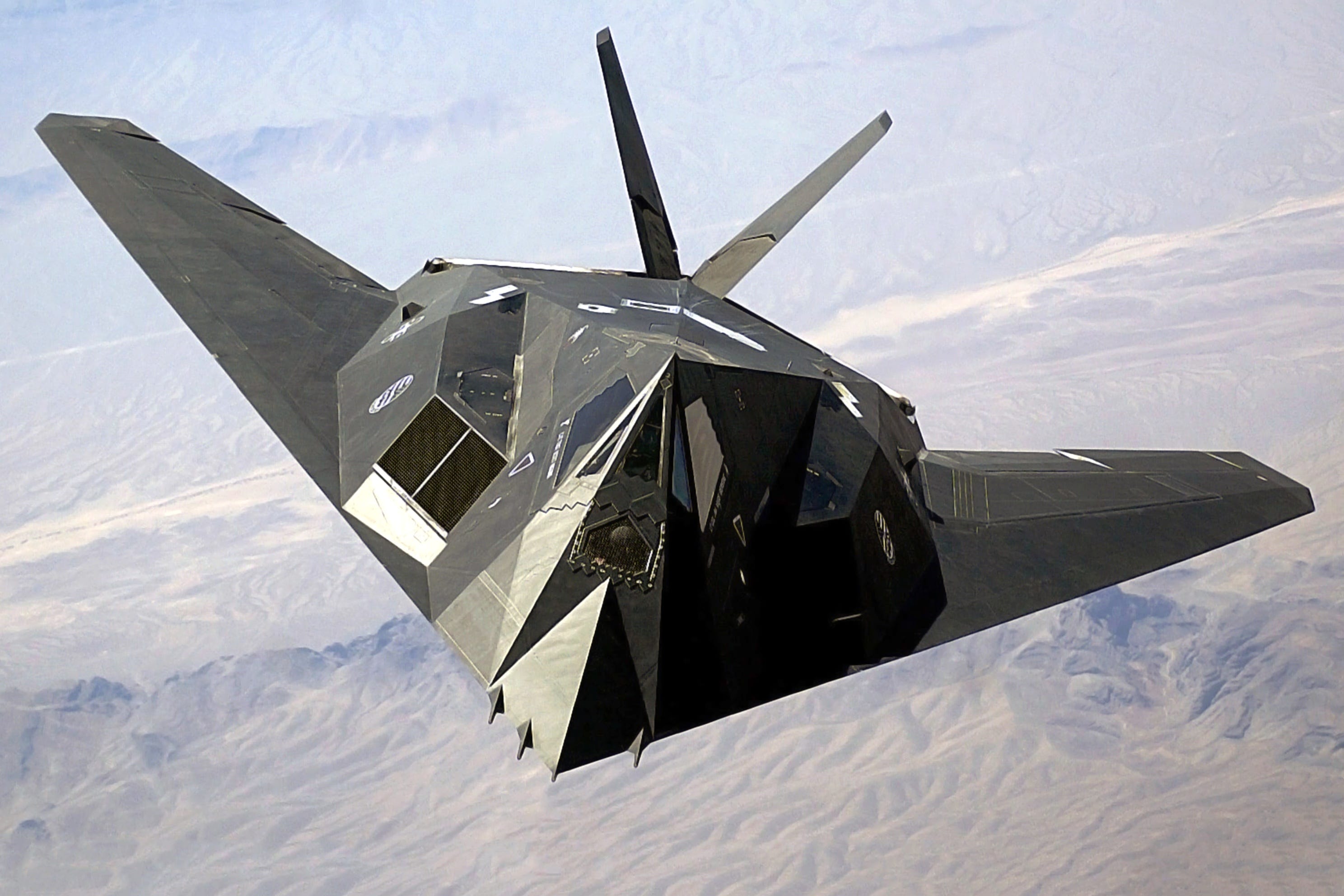
The design challenge facing Kelly Johnson, then, was daunting: To safely overfly the Soviet Union and take high‑quality photos undetected required a plane that could fly more than four thousand miles without refueling, and reach at least 70,000 feet—beyond the reach of Soviet air defenses and so high that it wouldn’t create vapor trails, thus revealing itself.
In short, this plane would need to be extremely light, while carrying an array of the most advanced cameras, sensors, and navigational gear available.
The need was also urgent. Existentially so.
That March, Kelly submitted Lockheed Report #9732 for an ultralight, high‑flying surveillance plane with an enormous wingspan to the Air Force.
The pitch was radical in that the plane Kelly was proposing had no landing gear, to save weight. Being as light as possible is mission critical for flying high, so Kelly was looking for weight savings wherever he could find it and decided that his plane would drop its gear upon takeoff and land on a reinforced belly.
The pitch was not a hit. Kelly received a letter from the Air Force declining the proposal “on the basis that [the concept] was too unusual.”
But one Air Force official loved the idea: Trevor Gardner, the “technologically evangelical” assistant secretary for research and development. Gardner knew of a different buyer who might be interested and summoned Kelly to Washington in November for an urgent meeting.
On November 19, Kelly met with a group of officers, engineers, and scientists, and endured a grilling that reminded him of his college days.
Shortly thereafter, top officials took the proposal to Eisenhower in person, because the president feared leaks and the subject was considered too highly classified to be put in a written report.
Eisenhower approved the plan, with a stipulation. “It should be handled in an unconventional way so that it would not become entangled in the bureaucracy of the Defense Department.”
It was given instead to the CIA.
In advance of his trip to Washington, Kelly had been warned by his bosses not to commit to anything and he worried that he might have to take a leave of absence from his job at Lockheed proper to take on this project.
Lockheed’s capacity was straining, especially in engineering. Still, when Kelly met Robert Gross and Hall Hibbard—the only two men he was cleared to tell—he told them that this was a job Lockheed had to take. And that secrecy demanded that he run the entire program, from design to manufacture, in his Skunk Works.
The two bosses heard him out and agreed.
This was, arguably, the biggest single moment in the history of the Lockheed Skunk Works, in that Kelly now had approval for something more than an experimental design shop. He was given the green light to run his own production, too. Which meant that he wasn’t just building prototypes. He would oversee full production of all planes built for the program.
What’s more, the government was willing to hand him unprecedented control. Lockheed was taking “full responsibility for the design, mockup, building, secret testing, and field maintenance of this unorthodox vehicle.”
Kelly spent two days refining the concept himself, then summoned five key Skunks to his office for a meeting.
He looked at the assembled talent and spoke of a new program, one more secret than anything any of them had ever worked on, and then, without revealing any details about what they’d actually be doing, asked if they were willing to commit eighteen months to such a project.
All five said that, yes, they absolutely would. And then Kelly leveled with them. He’d sold the CIA a high‑altitude reconnaissance airplane. They could have a few days to wrap up their current work but should be ready to go full bore on Monday, December 2. It was time to make history.
—
Kelly’s reconstituted Skunk Works began with twenty‑five engineers, with his trusted shop man, Art Viereck, in charge of production. Kelly assigned Ed Baldwin to handle the traditional three‑view drawing.
Four days later, Baldwin had the first drawings completed, and by December 10 the basic design was frozen. It was, more or less, the configuration that would go into production. Which is fairly astounding to consider once you know what the plane Kelly laid out and Baldy sketched would become.
Shortly after beginning, Kelly prepared a twenty‑three‑page report for the CIA with his updated thoughts on the plane his Skunk Works would build. Among them, that the Angel, as he was calling it, would have a maximum speed of Mach 0.8 (460 knots) in level flight, with a ceiling of 73,100 feet—an absurd altitude that had only been reached at this point by research balloons and a few highly experimental one‑off aircraft.
He promised to have the first plane flying by August 2, 1955, and all Angels finished and delivered to an as‑yet‑unchosen test site by December 1.
When Kelly selected his design team, he announced that they’d all work forty‑five‑hour weeks. That number quickly rose to sixty‑five,
and the actual schedule, once the project was fully running, required more like one hundred hours a week. It was the only way Kelly could hit his audacious eight‑month target.
The work was fast and furious. “Working like mad on airplane,” Kelly wrote in the project log. So mad that he began work before he had a contract or any idea of how the money would flow from the government to Lockheed.
Government contracts were sometimes paid upon completion or on delayed schedules. Kelly insisted on splitting the tab up into smaller payments, made regularly, so that he didn’t have to “go running to the bank to carry the government.”
It is almost impossible to believe that a company as large as Lockheed could charge forward on an experimental program without a contract from the government, but this combination of mystery and subterfuge only assured Kelly that no bureaucracy would stand in his way. As for the government, this unconventional method of paying a contractor—in secret, out of oversight of even Congress—wasn’t illegal.
So‑called unvouchered funds were allowable for covert projects, according to a law passed by Congress in 1949, which stated that only the director of the CIA could access them. This was the only way a program could control secrecy, by avoiding things like competitive bidding and public procurement of parts.
The project was codenamed AQUATONE and would be funded by the CIA’s secret Contingency Reserve Fund. Herb Miller, chief of the Office of Scientific Intelligence’s Nuclear Energy Division, was named executive officer. And Richard “Dick” Bissell was handpicked by CIA Director Allen Dulles to oversee this audacious program.
Bissell’s so‑called Development Project Staff was the only CIA section with its own communications office and operational cable traffic that transmitted to and from Lockheed. Only Bissell, who read every cable, could disseminate them, and they were the only cables at the CIA that didn’t automatically get copied and distributed to the director’s office.
Kelly’s loose, often garrulous nature wasn’t an obvious fit with Bissell’s stiff, effete stoicism, but the two got along well. Bissell understood that the program would only succeed if it stayed small and moved fast, and Kelly was almost uniquely suited among defense contractors to follow that model. His decisiveness in particular—“which allowed him to take shortcuts and render quick judgments without jeopardizing safety”—impressed Bissell.
Bissell didn’t give Kelly a deadline, but he imposed one upon himself. This new plane, which would fly higher than any in history, would be in the air by August 1—nine months after the project commenced.
Bissell doubted this was possible, but he worked with Kelly to strip as much bureaucracy as they could from the program. Kelly had just one point of contact—Bissell—who could answer his questions in a single phone call, and their monthly progress reports would be ruthlessly short, about five pages.
If this had been the Air Force, Bissell noted, that same report would be an inch thick, and every design change would require approval by “Wright Field, a couple of different laboratories, the budget office, the regulations office, and so forth.”
The CIA project was really version two of the Skunk Works, and its new home, Building 82, was an upgrade from the lean‑to where Kelly’s division was born, but not a big one.
Ben Rich was told to report there in December 1954. Rich was a twenty‑nine‑year‑old thermodynamics expert whose first patent had been for a special heater that helped solve a painful and embarrassing problem for naval aviators: At higher altitudes, their penises would sometimes freeze to the side of the tube used for peeing in flight.
Rich had no idea what was happening inside that enormous assembly building by the runway before Kelly asked “to borrow a thermodynamicist, preferably a smart one.” The timing was fortuitous. Rich, in his first year at Lockheed, felt “creatively frustrated” and was on the verge of leaving the company.
This job was a dream. The surroundings, not so much. Rich was surprised to find the company’s brilliant star engineer, the venerable Kelly Johnson, tucked away in what felt like a warren. Desks were crammed together.
“Adding to the eccentric flavor,” Rich later wrote, when the hangar doors were opened to get some air flowing, birds would fly in “and swoop around drawing boards and divebomb our heads, after knocking themselves silly” against the windows that were painted black, at Kelly’s direction, for secrecy.
One of Kelly’s top engineers, Dick Boehme, assigned Rich to a desk in an office with six others and gave him a copy of Kelly’s ten basic rules. “For as long as you work here,” Rich recalls him saying, “this is your gospel.” Then he told the young engineer what he’d be working on—a jet engine modified to fly 15,000 feet higher than any engine had flown before—and showed him a picture of the plane it was to go with.
Rich was stunned. He’d expected a fighter, not a glider. “What is this?”
“The U‑2,” Boehme replied. “You’ve just had a look at the most secret project in the free world.”
Rich would go on to have his own legendary career at the Skunk Works, as Kelly’s right hand, and the boss’s determination was one of the first lessons he absorbed: “Once that guy made up his mind to do something he was as relentless as a bowling ball heading toward a ten‑pin strike,” Rich would say. But for that to work, you have to be willing to back it up with results, and spine. “With his chili‑pepper temperament, he was poison to any bureaucrat, a disaster to ass-coverers, excuse‑makers, or fault‑finders.”
The sum total of Kelly’s attributes, Rich thought, was that you just wanted to make him proud: “We peons viewed him with the knee‑knocking dread and awe of the almighty best described in the Old Testament.”
It wasn’t that the Skunk Works was established as a set of rules and governed exactly that way for decades. Kelly was constantly refining his methods along the way.
One of the key elements of making an experimental shop work was that the company had to allow the person running it to—as he once explained—“tear down long‑established empires.”
Departments become entrenched and defend their responsibilities. It’s hard to take them away once they’ve been established. Purchasing, for instance, gave Kelly fits. The Skunk Works needed its own purchasing, with its own rules, one of which was that the guys who worked there shouldn’t also do engineering. But the engineers also shouldn’t do purchasing.
Engineers want the perfect part, even if they don’t actually need it, and they don’t always know the cost. Often, something slightly less perfect, or less expensive, works just as well. And vendors want to make the engineers happy. They also like sales. The end result is higher bills.
Secrecy was of paramount importance. This was the most secret defense program since the Manhattan Project. And Kelly took that very seriously. But, on the team itself, this was mostly about trust and understanding.
Keep the group small, make the stakes clear, and don’t bother with an elaborate security apparatus. Kelly’s philosophy about secret documents was that they should not be labeled. If you stamp secret on something, you’re just asking for someone to try to read it. A document is far safer if it looks like any other boring old report. He felt the same way about locked drawers, and even doors.
When a program was finished, he mostly just destroyed the documents. Years later, when the Air Force came in to perform a security audit, they asked Kelly where the files were. I destroyed them, he said. And where’s the record? He didn’t have that, either.
The phrase “need‑to‑know” is today a cliché of covert projects, but the concept was born on these early CIA black programs. Many workers even inside the Skunk Works didn’t have the entire picture of what was going on. They might know that they were building a wing for a high‑altitude plane, but they didn’t know what that plane was being designed to do. That simply wasn’t information you needed to know to do your job.
Secrecy complicated everything, including the official name of the plane. Inside the Skunk Works, people tended to use the nickname Kelly liked—“the Angel”—while the small group cleared into the program at the CIA, being bureaucrats, called it “the Article.”
The project was so closely guarded that in early 1955 the Air Force put a call out to contractors for a plane it called the X‑17, and when Johnson saw the proposal, he was irate. It was, he thought, “a dead‑ringer for our original presentation.” The Air Force department that issued it had, in his opinion, clearly used his original pitch and somehow didn’t know about the CIA’s secret project, which was a good sign for secrecy but infuriating nonetheless.
Kelly called Dick Bissell on a Sunday, then flew to Washington to share the proposal with Bissell and Gardner. Their reaction, Kelly wrote in the project log, was “stark horror.” The proposal was swiftly killed.
It was, to Kelly, yet another sign of the Pentagon’s broken contracting process.
Throughout Lockheed’s development process, tension simmered among the small number of people within the Air Force and CIA who knew about Kelly’s project.
In March 1955, the Air Force chief of staff told DCI Dulles that he hoped to take over the program once the plane was flying, and he met stiff resistance. That debate simmered until Eisenhower declared that the CIA would remain in control even once missions commenced.
“I want this whole thing to be a civilian operation,” Eisenhower said. “If uniformed personnel of the armed services of the United States fly over Russia, it is an act of war—legally—and I don’t want any part of it.”
Engineers who worked under Kelly often talk about how practical his genius was. Rather than obsess over innovation that might be possible, he’d focus on what he knew could be done, based on existing technologies. The U‑2 is a prime example. “It’s sort of a nothing, technically,” is how Dick Heppe later described it, as a preface to explaining how impressive Kelly’s design mind was.
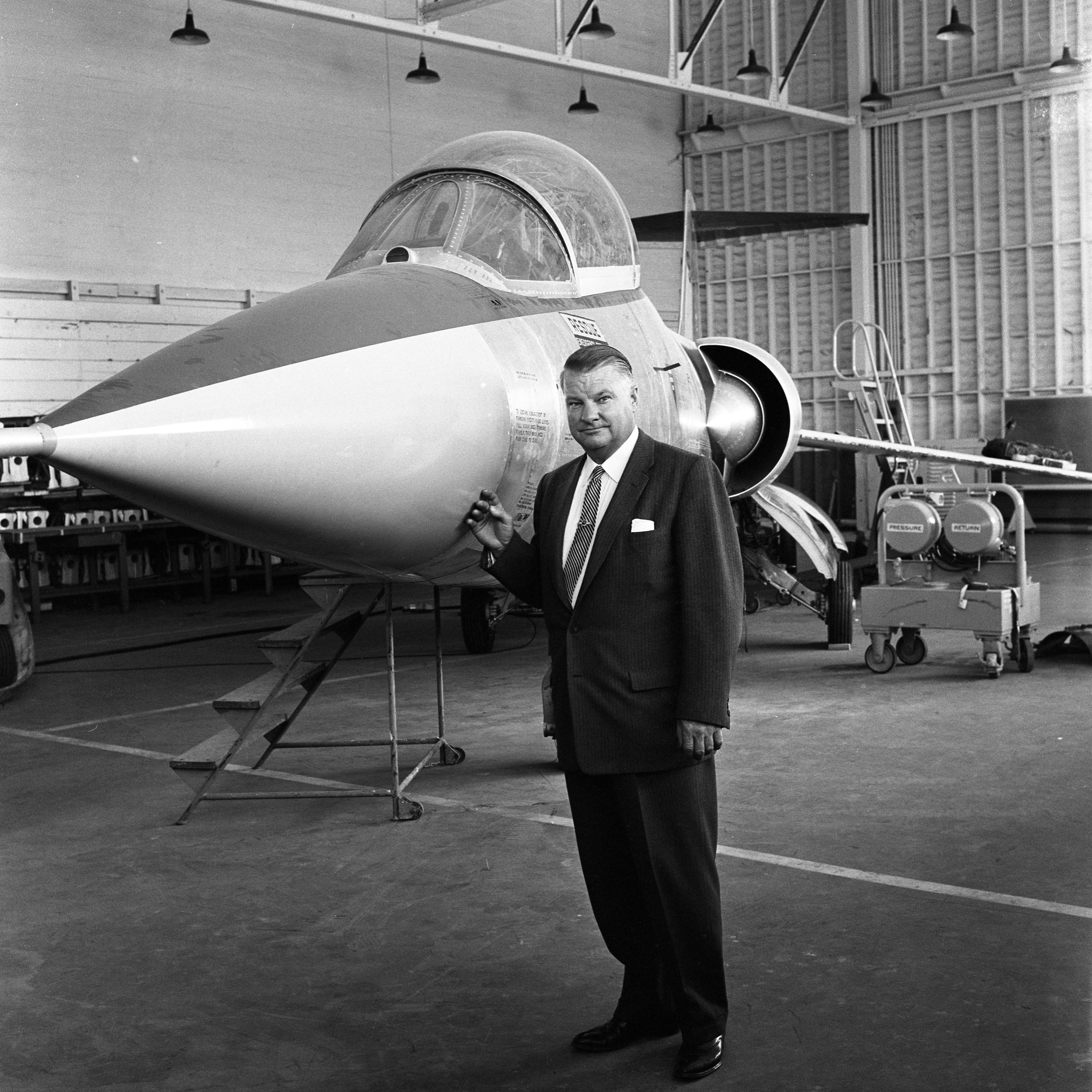
It was, essentially, the fuselage of a previous design— his F‑104 fighter—with subsonic inlets for the engine, because this plane didn’t necessarily need to be fast. The U-2’s key novel attribute was the enormous wing, and extremely light wing loading, paired with a powerful engine. The result was a capability “completely unknown and unavailable in any other machine,” the ability to fly long range at 70,000 feet or higher.
And by late summer 1955, the prototype was ready.
The plane had arrived on time and under budget—a lot under budget. By the time Kelly had a prototype flying, there was $4 million to $5 million in leftover funds. He used that, plus spare parts, to deliver five extra planes to Uncle Sam for free. This special bonus price was, Air Force liaison officer Leo Geary later said, “probably the finest bargain the American taxpayer has ever had under any circumstances.”
 | A guest post by
|