

This Is The U.S.'s Last Chance At Solar
It's perovskite or bust

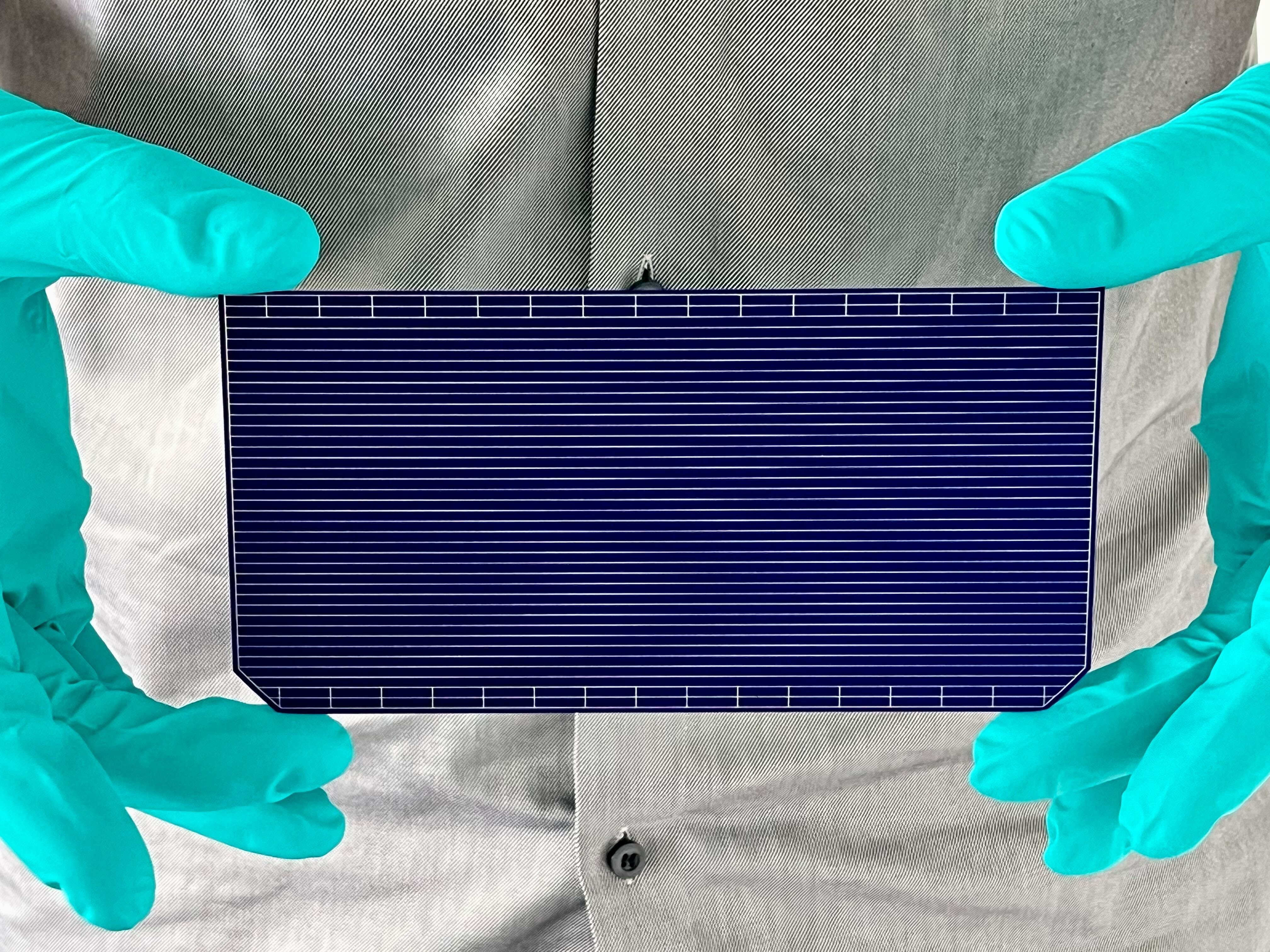
The story of the U.S. solar industry over the past twenty years is a painful read. Technologies invented at U.S. universities and national laboratories made their way to China where they were perfected, subsidized and manufactured at low costs and huge volumes. China put in the money and effort needed to make solar technology blossom and to wipe out all comers. It’s now installing more than twice as many solar panels as the rest of the world combined. Meanwhile, the U.S. failed to mount formidable competition or to develop ultra-ambitious plans of its own.
The conventional wisdom today is that the U.S. has little hope of recovering. China won and will be selling the rest of the world solar technology for decades to come.
Joel Jean, however, has an alternate version of this future to propose.
Jean is the co-founder and CEO of Swift Solar, a start-up based in San Carlos, Calif. Founded in 2018, Swift has been working to develop a new type of solar technology that marries existing silicon-based solar cells with cells made from perovskites. To which your next thought is probably, “What the fuck is a perovskite?”
There’s a mineral called perovskite, but it’s not really what we’re after here. We’re talking about synthetic materials with a crystal structure that resembles that of perovskites found in nature. These synthetic perovskite crystals happen to be very good at capturing sunlight and turning it into electricity. They’re also relatively simple to produce. These properties of perovskites have had people excited for many years because they could lead to better, cheaper solar cells than those made today out of silicon.
The problem with perovskites has been that they tend to work well in laboratories in terms of converting light into electricity, but they degrade quickly, especially when placed outdoors where they’re exposed to the elements, temperature fluctuations and, well, sunlight. All of which becomes rather troubling when you’re making a solar panel that’s meant to sit outside in the baking sun for decades.
The promise of perovskites has proven irresistible to the solar industry, which has been hyping the technology for more than a decade. No one, though, has really solved the degradation issues, and this is what has Jean excited because the uncertainty opens up opportunity.
“The research community has seen tons of different technologies come and go,” he says. “But this is the first time we have something that can overtake silicon on performance and cost. This creates a moment for a reset, and I think the U.S. and Europe really do still have a chance here to leapfrog China.”
Jean is an always-smiling, upbeat dude with a PhD in electrical engineering from MIT. He likes to position himself as the dummy among a group of several Swift Solar co-founders who also have PhDs from places like Oxford and MIT and have been the pioneers of the perovskite field, driving many of the breakthroughs that have made the technology so compelling.
They’ve all been working together at Swift’s research and development facility in San Carlos to create a production line that shifts the technology from handmade solar cells to cells that can be mass manufactured. And Jean now thinks the company is a couple years away from making tens of megawatts to hundreds of megawatts in stable solar cells per year.


AS PROOF of its confidence, the company today will announce a major move by buying some of the manufacturing assets and intellectual property of Meyer Burger, a onetime Swiss/German solar manufacturing powerhouse. Swift will take over a traditional solar cell production line in Bitterfeld-Wolfen, Germany and machines and patents tied to more advanced cell production techniques.
Swift plans to enter the more traditional solar market quickly by building a cell and panel factory based on the Meyer Burger technology in the U.S. It will then look to add its perovskite equipment to the same production line and create cells that blend perovskite and silicon. If all goes smoothly, the combo cells pumped out by the factory would have much higher efficiency than current silicon-only cells. (Current solar cells have approached a limit of 30 percent efficiency, while the so-called tandem cells could hit 45 percent efficiency.)
Meyer Burger had once supplied the Chinese solar industry with solar cell manufacturing equipment but saw its sales plummet as Chinese companies mimicked the technology. Meyer Burger tried to shift toward making solar cells and panels around 2020 but failed to pull off the pivot due to a variety of issues, including high headcount costs and a large debt load. This left the company to file for bankruptcy in the U.S. and insolvency in Germany last year and to shut down a solar panel factory in Arizona, which had once been meant to be part of a major U.S. solar expansion. Due to this distress, Swift was able to buy some assets on the cheap and to hire a number of Meyer Burger’s top employees, including its former CEO Gunter Erfurt and global R&D lead Marcel Koenig.
Meyer Burger’s tale is representative of the woes that have beleaguered solar efforts in the U.S. and Europe, although Swift Solar hopes to turn the pain and sadness into a win.
“The Meyer Burger team gives us a lot of manufacturing expertise,” Jean says. “We’re going to take the best of Western silicon manufacturing technology and combine it with the perovskite technology and get the best of both worlds.”
DESPITE THE stability issues with perovskites, China has been barreling forward. It has a handful of companies selling perovskite panels and building up to gigawatt-scale production lines. The Chinese government has also flagged the development of perovskite technology as a national priority.
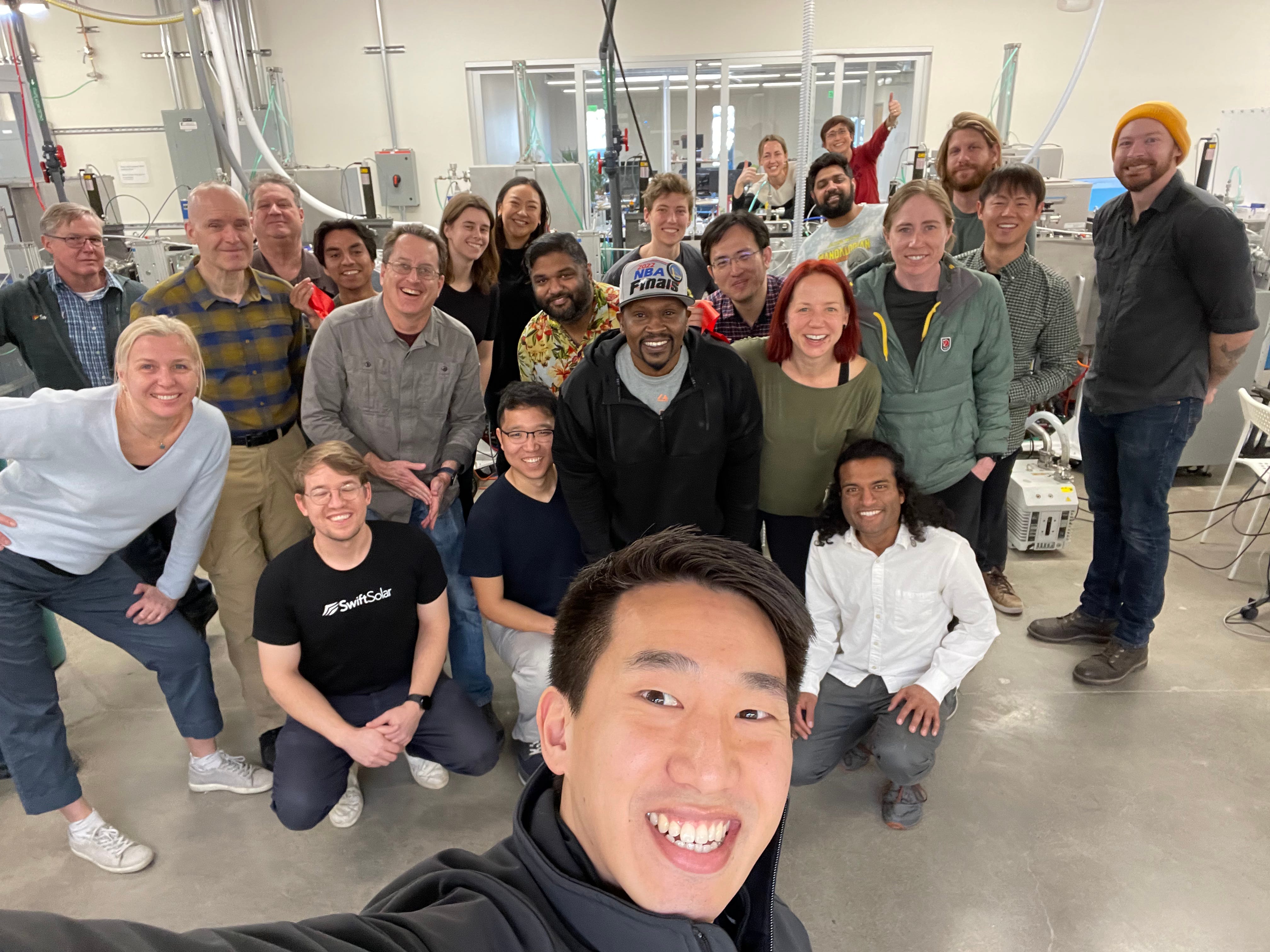
Jean and his team, however, remain convinced that these Chinese manufacturers have yet to crack the science on making the perovskite cells last for decades. China will have a lead on dialing in the manufacturing operations but could still lose this crucial race if Swift can out-engineer its rivals.
“China tends to scale first and ask questions later,” Jean says. “That’s not a viable strategy in the U.S. The important thing is that scaling doesn’t solve science questions.
“It’s a competition. We might very well lose, but I think we’re one of the best shots the West has. It’s going to come down to who can solve these underlying problems.”
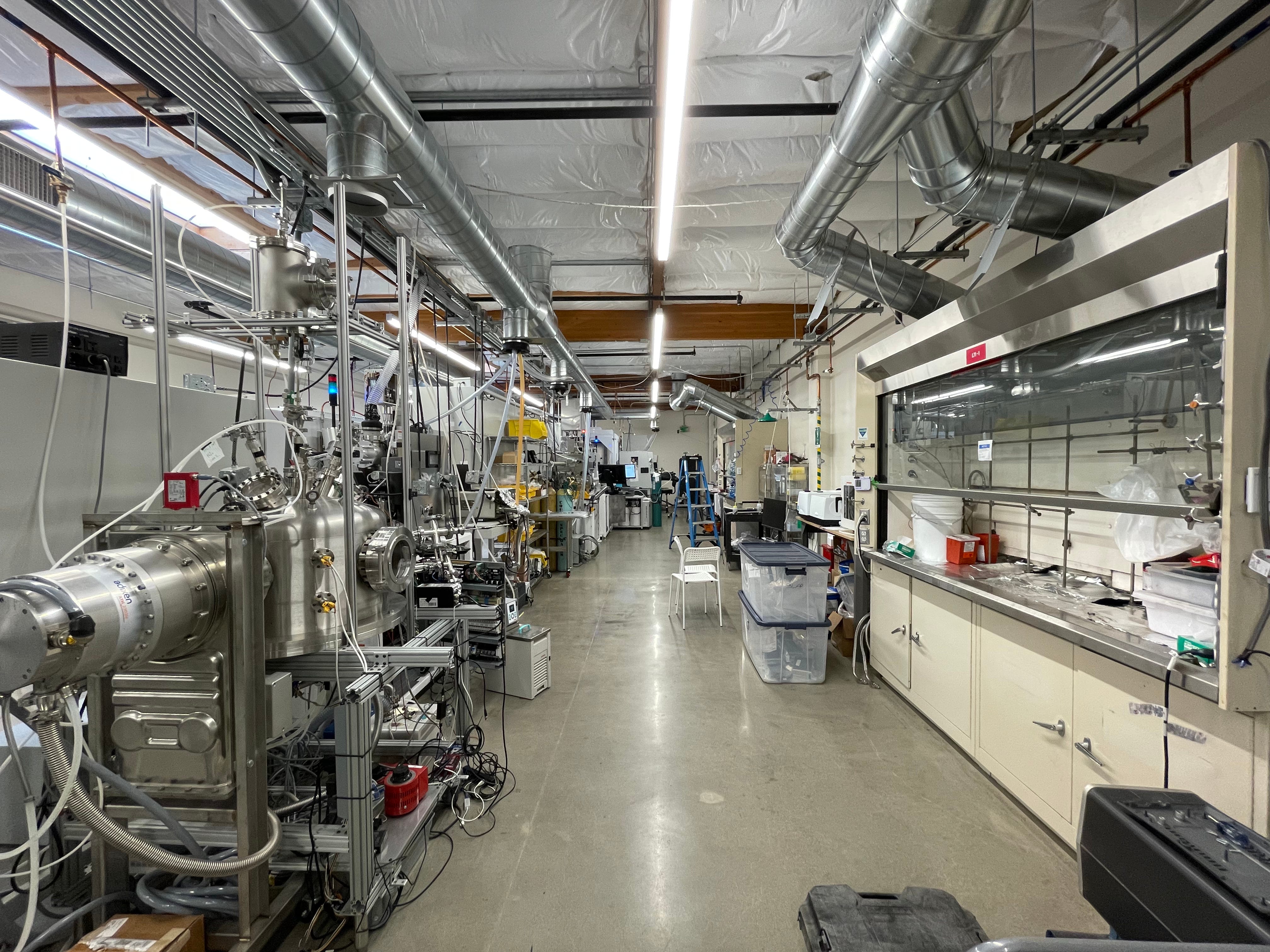
In San Carlos, Swift has taken over an old warehouse and filled it with machinery – much of it hand built over the years by the company’s engineers. Their current mission has been to sandwich layers of silicon and perovskite together to create tandem cells and then run those cells through many cycles of charging and discharging. Some of this work is done with machines that produce intense faux sunlight, while Swift also tests its cells on the rooftop of its building as well as outdoors at national labs and at customer sites.
Swift has more of its own creations for replicating high-temperature conditions across many cells and for depositing thin perovskite layers. (Some of the earliest incarnations of these machines were built in the co-founders’ shared living room in Colorado.)
The big trick all of this equipment is designed to solve is finding the right combination of materials and manufacturing processes that allow the perovskite cells to maintain their composition and performance through the 30 years of use that the solar industry expects. “There are all of these interactions between the materials and then expansion and contraction from thermal cycles,” Jean says. “Chemical reactions can be accelerated by heat and light. Things can delaminate and pull apart. It’s all very fragile to put it mildly.”
Jean can see a future – perhaps a decade away – where perovskites replace silicon altogether as the main semiconductor in solar cells. The synthetic materials can be produced at much lower costs than silicon and could have a massive effect on lowering solar costs. In the meantime, however, the silicon and perovskite blend allows the company to piggyback on existing technology, manufacturing processes, and supply chains.
So far, Swift has raised $70 million in venture funding (James Fickel, Eni Next, Fontinalis Partners and others) and another $15 million in non-dilutive funding from the likes of the Department of Energy and the Defense Department – aka The Department Of War/Kidnapping/And Greenland Lust.
As the company is taking on China in a field that the PRC holds very dear and with a still unproven technology, it has some work to do. But stranger things have happened.
Just a couple of blocks from Swift’s headquarters were the original headquarters of a tiny company called Tesla. It too began in an old warehouse, and it was trying to make an electric sports car powered by laptop batteries, and, well, very few people thought this was a practical idea.