

The Spinal Implant Giving Paralyzed People New Hope
Meet Julie Verlinden

Julie Verlinden had just completed her master’s degree in archaeology. It was January of 2022. She’d been studying at Bilkent University in Ankara for months, visiting historical sites in and around Turkey. Now she wanted a break and planned to go on a road trip back home to Belgium with her boyfriend, a fellow archaeologist. The couple hoped to break up the long drive with jaunts to historical points of interest – a mix of work and pleasure. They gathered up their belongings from the university in Ankara and set off on the journey full of good cheer and excitement.
Not long into their trip, however, Verlinden’s life was shattered.
After a couple days of driving, Verlinden and her partner had made it to Serbia. It was 7 p.m., and dark. Verlinden, then 22, sat in the passenger seat of their car and chatted with her boyfriend as they listened to music. They were making good progress on the highway when, out of nowhere, a man flung himself in front of their vehicle.
The man collided with the passenger side of the car where Verlinden sat. His body catapulted into the air and then fell to the ground. The impact crushed the car’s frame and squished Verlinden’s body into the footwell where she remained folded up and stuck.
Verlinden passed out. She could not have known it at the time, but her neck had been broken in two places, and her spine had ruptured near the fourth and fifth vertebrae. She would be paralyzed from the waist down and suffer some paralysis in her arms and hands. “The rest of the night is a blur,” Verlinden says. “It’s not that nice of a story.”
The next few hours and days were, in fact, horrific.
The crash had taken place on a remote stretch of road. Her partner, bruised and covered in glass, called for an ambulance, but it would not end up arriving for three hours. In the meantime, he tried to flag down other motorists. No one would stop. Verlinden remained compressed in the car, and her partner struggled to move her, fearing he would only cause more harm.
When the ambulance finally arrived, it transported Verlinden to a country hospital. The staff were unprepared to deal with such a severe injury. Verlinden went in and out of consciousness. She spoke several languages, but, when awake, failed to find anyone who could communicate with her. Verlinden’s partner wasn’t at the hospital (she didn’t understand why this was the case), and she had no way to contact her family.
Verlinden would later learn that the man who hurled himself in front of her car was a Turkish truck driver. He’d been in agitated state that day and told his coworkers that he was having suicidal thoughts. At some point that evening, he had parked his truck by the side of the road and then waited for an opportunity to throw himself into a moving vehicle.
When the police had finally arrived on the scene, they arrested Verlinden’s boyfriend on suspicion of manslaughter and seized his and Verlinden’s identity papers. The boyfriend was detained as the police investigated the incident and was then released. “After that, we were finally reunited at the hospital,” Verlinden says. “But then, it was during Covid, and he could only see me for a few minutes a day.”
Time is precious after a major spinal injury. If some injuries are treated fast and well, the patient’s outcome can be improved dramatically. Verlinden had no such luck. She wasted away first at the country hospital and then a university hospital for about ten days, unable to move or eat or drink. The hospital staff, in part because of Covid, limited Verlinden’s interactions with her partner and family to a few minutes each day. “I didn’t know what was going on, and my family didn’t know how I was doing,” Verlinden says. “They spent hours waiting in the hospital corridor from dusk until dawn with no information.”
Then, after much effort, her family arranged a medical transport to fly Verlinden back to a Belgian hospital.
“I didn’t get the treatment that was needed, but you can’t really blame them,” Verlinden says. “They didn’t have the best equipment and had no clue what to do with me. It caused many complications when I returned to Belgium. I was just at the wrong moment in the wrong place.”
I FIRST met Verlinden in April of 2023, almost a year and a half after her accident. We were at a physical therapy center inside of a hospital in Lausanne, Switzerland. The center does a lot of work with paralyzed patients and has an open central room outfitted with parallel bars and hoists and specialized exercise equipment. Large windows flank one side of the room and help it feel less clinical and more welcoming for the people who must come inside and put in hard work to try and get the most out of their broken bodies.
When Verlinden rolled into the room in her wheelchair, the physical therapists lit up. They had worked with Verlinden for many weeks in 2022, and this was the first time that they’d seen her in a while. Dressed in a white sweater and baggy navy pants, Verlinden had a beaming smile of her own and an obviously sweet disposition. I had assumed everyone in the room was just happy to be reunited and that this was the reason for the therapists’ extra cheerful faces.
Over the course of the day, however, I would come to understand that something else was at play.
As a result of her injuries, Verlinden, like many quadriplegics, suffered from huge fluctuations in her blood pressure. If she tried to move from her bed to her wheelchair, her blood pressure would drop so low that she would often pass out. It’s the more severe version of that light-headed feeling many people get when they stand quickly after being at rest.
“It could take me hours to get out of bed in the morning,” Verlinden says. “I would just keep fainting. And then, when I had some sort of stable blood pressure, I was fatigued all the time. I was dizzy. My vision was blurred.”
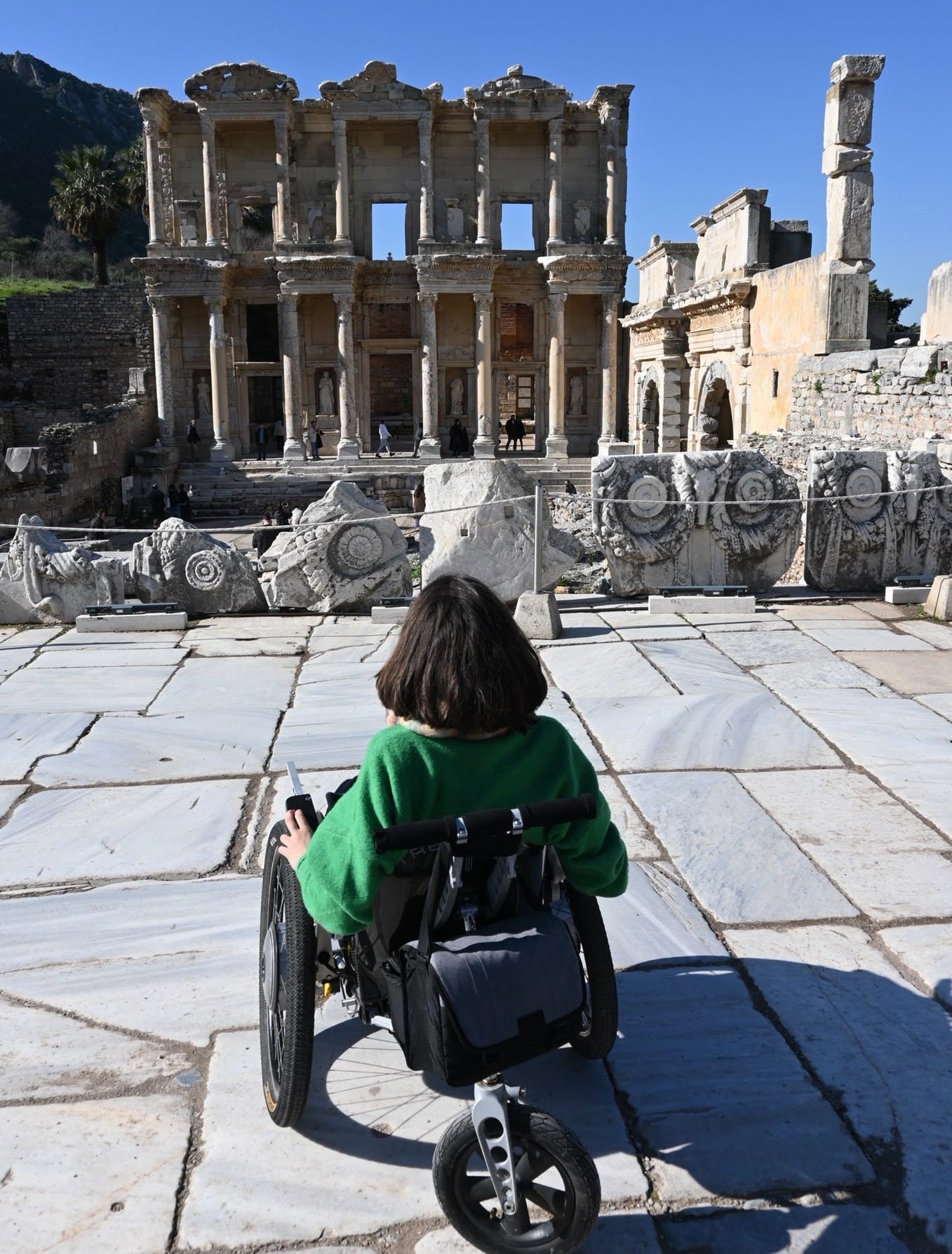
Before her injury, Verlinden had been charging after a PhD. She’d also been super active – tennis, soccer, skiing and surfing. She had wanderlust and imagined that she’d spend a lifetime traveling around Europe and Asia Minor pursuing her archaeological work.
Being paralyzed was bad enough for such a vibrant person so full of dreams and ambition. The fainting spells, though, took away Verlinden’s entire life. “It had a huge impact on me mentally,” she says. “Everything was so difficult. I could not do rehab or normal activities. Going out with friends was impossible. I would faint up to ten times per day. I could not do academic work. I had to put everything on hold.”
After dealing with her newfound condition for months, Verlinden could see no future. Euthanasia is legal in Belgium in cases of “unbearable suffering,” and Verlinden began researching how to go through the process.
During one attempt to find advice on coping with her injury, Verlinden stumbled upon the web site for Onward Medical. It’s a Swiss medical device company that makes a range of technology for people dealing with conditions like paralysis and Parkinson’s disease. Onward’s flashiest results have come via a spinal implant that allows paralyzed people to walk again and through an external stimulation device that helps paralyzed people move their upper limbs. Onward’s success in restoring movement has garnered the company much attention, including a recent piece from 60 Minutes. (We also have a podcast on Onward here.)
The company, though, can also use its spinal implant to ease the blood pressure issues. Verlinden saw this and wrote to Onward asking for help.
IN AUGUST of 2022, about eight months after her accident, Verlinden underwent a surgical procedure to have Onward’s implant placed on her spine. The device – called the ARCIM – delivers electrical stimulation to what’s known as the “Hemodynamic Hotspot,” which is an area of the spinal cord that has a high number of motor neurons that help with regulating blood pressure. When the stimulation is turned up, it sends signals that cause blood vessels to constrict and boost a person’s blood pressure.
Verlinden’s implant connects to a smartwatch and an app from Onward. Together, all this technology helps her activate the stimulation. Some patients choose to trigger the device when they want to get out of bed or accomplish a specific task. Verlinden, though, keeps it running most of her waking hours.
Right after the surgery, Verlinden stayed in Switzerland for rehab. And the therapists had seen her condition improve. They didn’t know, though, if the technology would alter her day-to-day activities enough to make Verlinden feel like life was still worth living.
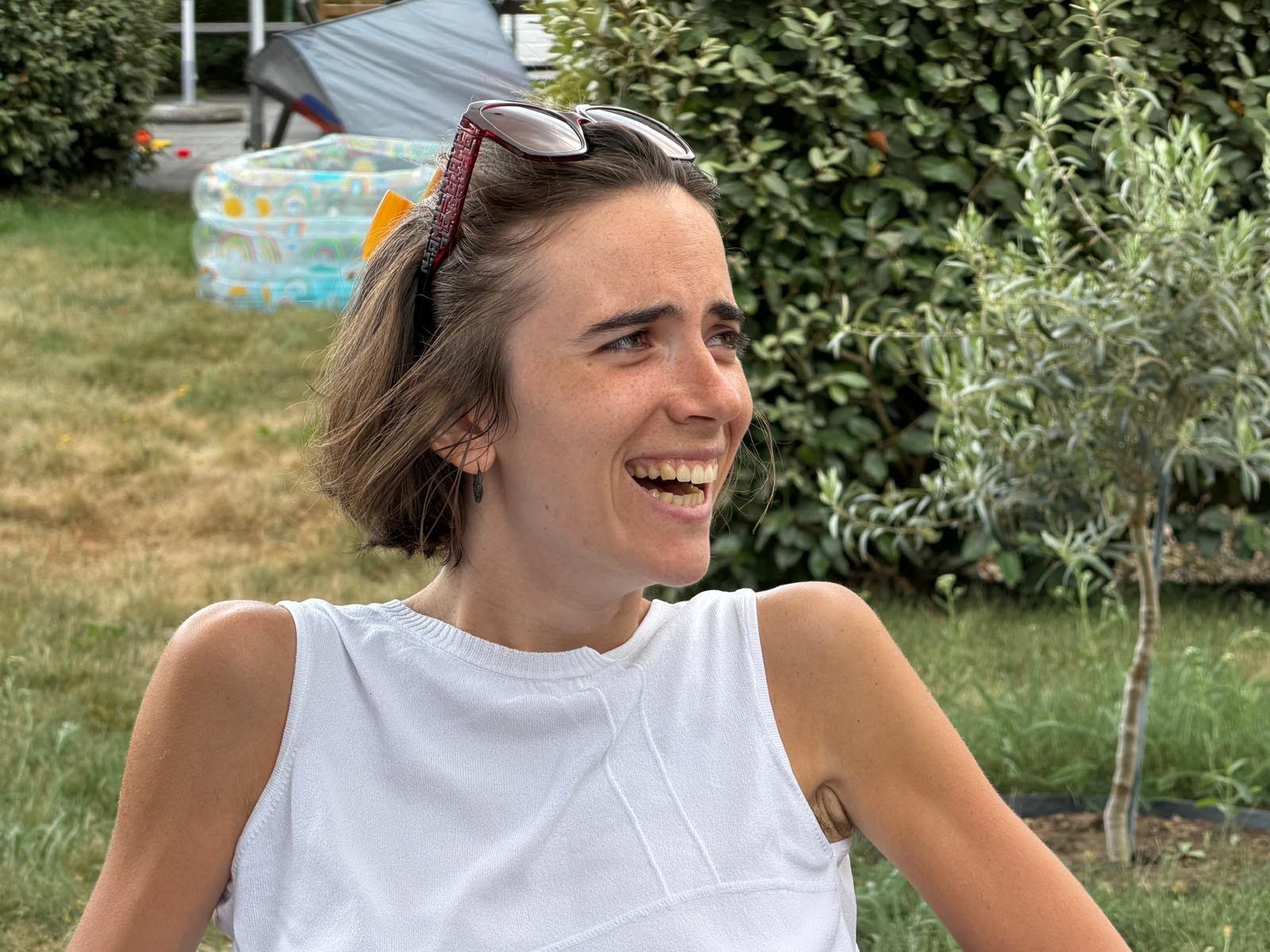
The smiles that appeared on her return visit reflected how much Verlinden’s countenance and disposition had changed. She was happy and talkative and upbeat again, and everyone could see this right away. “There was no joy in life before,” she says. “This has had a huge impact on my state of mind.”
The ARCIM technology has been going through trials to help restore movement, normalize blood pressure and aid with trunk stability in paralyzed patients. Onward is also exploring how it can help with things like sexual function and bowel control. The hope on the blood pressure front is that Onward will get through a current study and gain broad FDA approval.
There are about a dozen sites in the U.S. where patients can enroll to participate in the study, including a hospital in Denver where a patient recently received the spinal implant.
“The blood pressure indication is the first that we’re pursuing with the implantable device because that can impact everybody without the need for rehab and building back muscle mass and balance and so on,” says Dave Marver, Onward’s CEO. “We feel like that’s a really good place to start. And then we can stack onto that mobility, urinary incontinence, some of these other recovery targets as they become ready.”
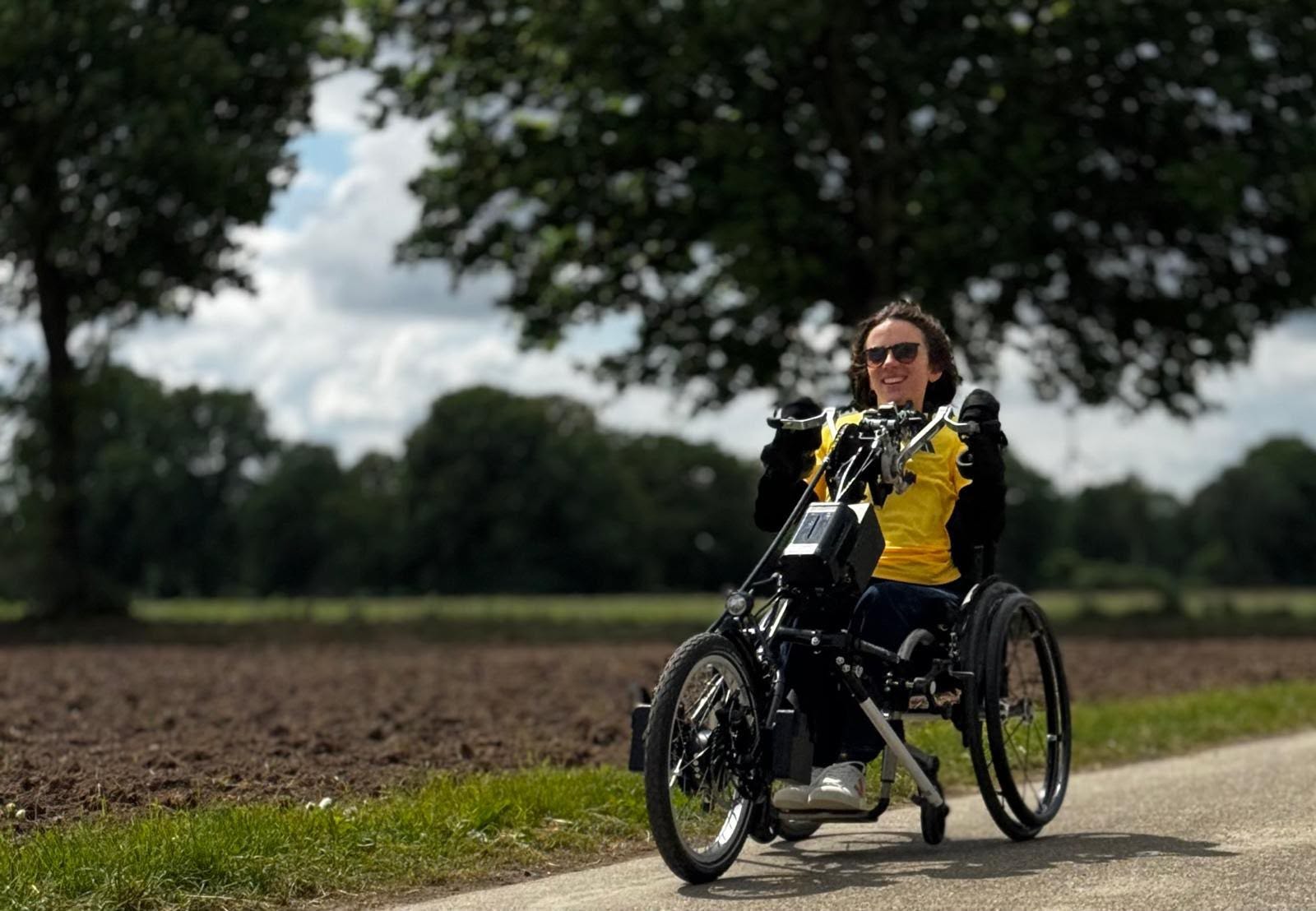
Life remains difficult for Verlinden. There’s the injury itself, and society, she says, does not do much to help people like her. Still, the implant has facilitated genuine progress. Verlinden has returned to her PhD program, conducting her studies both at home and abroad at university in Istanbul. She’s also taken up hand biking and has a richer social life.
“Without the stimulation, I think my body would not have been able to stay alive for much longer,” she says. “Now, I’m making plans to travel and am meeting up with friends. I just have a more positive outlook on life in general.”